
Nexa Blog
Why Your LinkedIn Messages Get Ignored (And How to Personalize Them Using Real Signals)
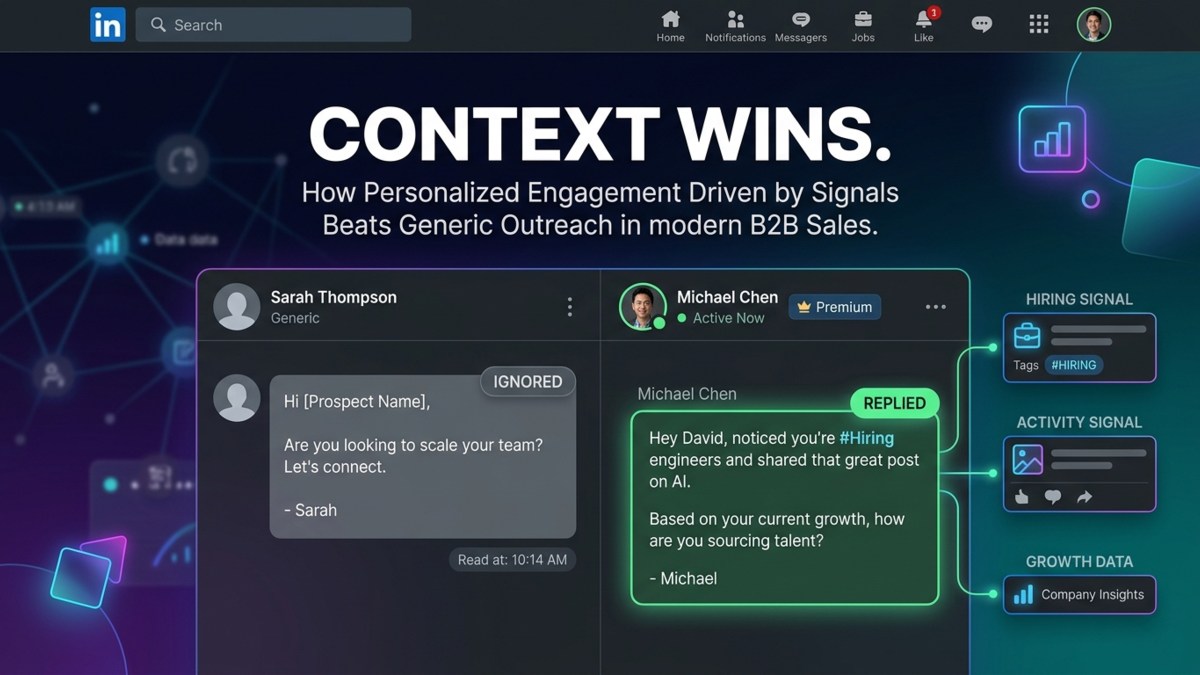
Your problem is not messaging. It’s relevance.
Most LinkedIn messages look like this:
“Hey, I help businesses generate leads. Would love to connect.”
No context. No reason. No reply.
That is not outreach.
That is spam.
“most templates fail when they lack context”
Templates are not the problem.
Using them without personalization is.
Tired of manually finding LinkedIn leads?
Personalization is not “Hi {FirstName}”
Let’s fix this quickly.
This is NOT personalization:
- Using their name
- Mentioning their company
- Saying “I saw your profile”
That is basic automation.
Real personalization = using a signal
“once you start using real intent signals”
Signals give your message a reason to exist.
The 4 types of personalization that actually work
1) Hiring-based personalization
Bad message:
“Hey, I help with lead generation.”
Better:
“Noticed you’re hiring SDRs — are you building outbound in-house or testing tools as well?”
Why it works:
- It’s specific
- It’s timely
- It’s relevant
2) Content-based personalization
If they posted something, use it.
Example:
“Saw your post about struggling with outbound consistency — are you currently relying more on manual outreach or tools?”
This shows:
- You paid attention
- You understand the problem
“most people ignore signals like posts and activity”
3) Event-based personalization
Triggers:
- New job
- Launch
- Funding
Example:
“Congrats on the new role — curious, is improving pipeline one of your immediate priorities?”
This works because timing is perfect.
4) Behavior-based personalization
If they:
- Comment a lot
- Engage often
- Are active daily
Example:
“Seen you active on a lot of growth posts — how are you currently handling outbound?”
This feels natural, not forced.
Find high-quality prospects in minutes.
The simple message framework (steal this)
Every high-converting DM follows this:
1. Signal (why them)
2. Context (what you noticed)
3. Question (start conversation)
Example:
“Noticed you’re hiring SDRs — are you scaling outbound internally or exploring external tools as well?”
That’s it.
No pitch.
No long paragraph.
Just relevance.
“this only works if your leads are already qualified”
Why most people still get ignored
Because they skip steps.
They:
- Don’t qualify
- Don’t check signals
- Send generic messages
- Blame LinkedIn
“if you're still doing basic LinkedIn outreach”
The platform is not the problem.
Your process is.
Real example: Generic vs Signal-based
Generic:
“Hey, I help SaaS companies generate leads. Interested?”
→ Ignored.
Signal-based:
“Saw you just launched a new product — how are you currently planning to drive initial traction?”
→ Conversation starts.
Same goal.
Different approach.
Stop wasting hours searching for prospects.
How this connects to your system
Let’s connect everything:
- Day 12 → You qualified leads
- Day 13 → You found high-intent signals
- Day 14 → You use those signals in messages
“this is how you build a real system”
This is no longer random outreach.
This is controlled pipeline building.
Where Nexa fits in
Doing this manually is slow:
- Finding signals
- Matching context
- Writing messages
Nexa helps you:
- Surface high-intent leads
- Identify signals quickly
“see how tools impact lead quality and outreach”
Because personalization is only powerful if you have the right data.
The mindset shift
Stop thinking:
“I need better templates.”
Start thinking:
“I need better context.”
Templates scale.
Context converts.
Generate verified B2B leads automatically.
What to do next
- Pick one signal (hiring, posts, etc.)
- Write 3 variations of messages
- Keep them short
- Focus on questions
- Track replies
“if you're looking to improve your workflow with tools”
That is how you turn cold DMs into real conversations.
Related articles
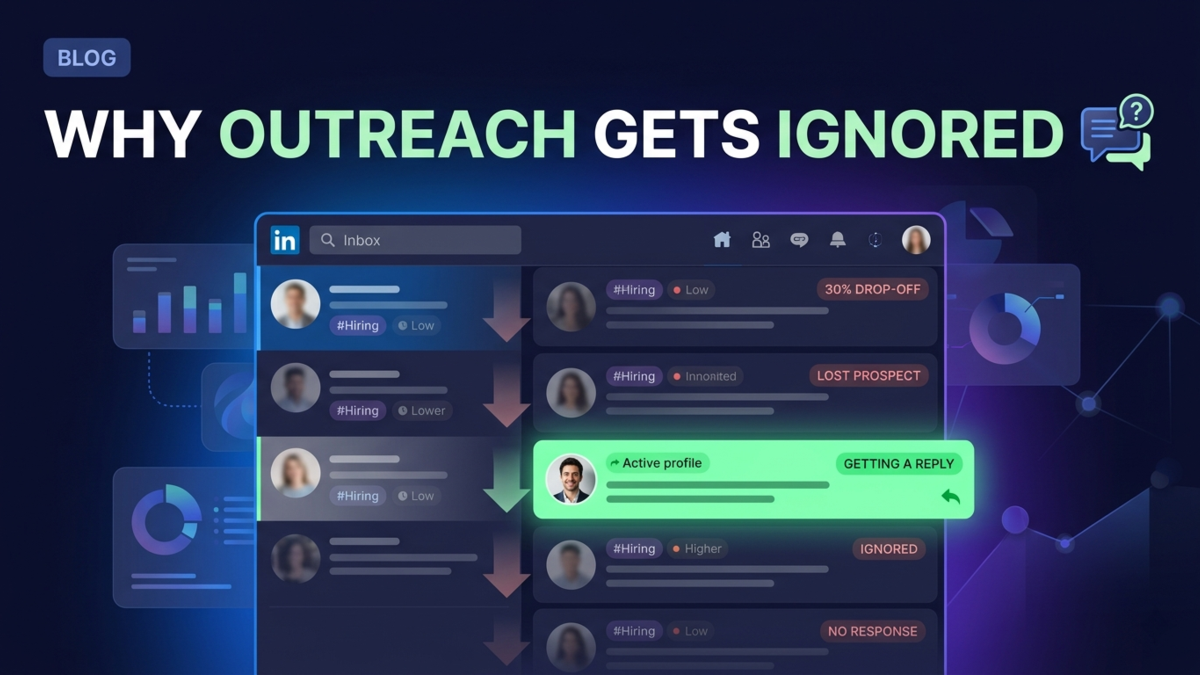
Why Your LinkedIn Outreach Gets Ignored (30% Bounce Rate Explained + Fix)
If your LinkedIn outreach feels like it’s getting ignored, you’re not alone. What looks like a “30% bounce rate” is actually a deeper problem with targeting, timing, and messaging. Here’s how to fix it.
Read more →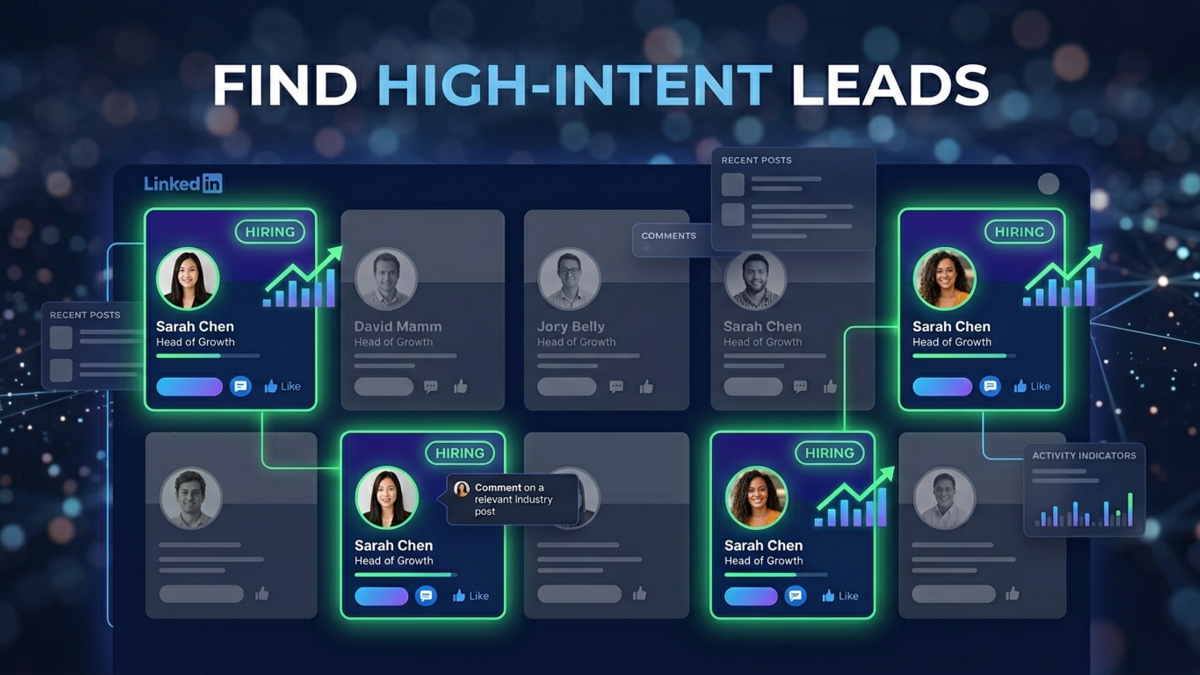
How to Find High-Intent Leads on LinkedIn (The Signals Everyone Else Misses)
Most people scrape random LinkedIn profiles and hope something converts. This guide shows you how to find high-intent leads using real signals like hiring, posting, and growth activity—so you only reach out to people ready to buy.
Read more →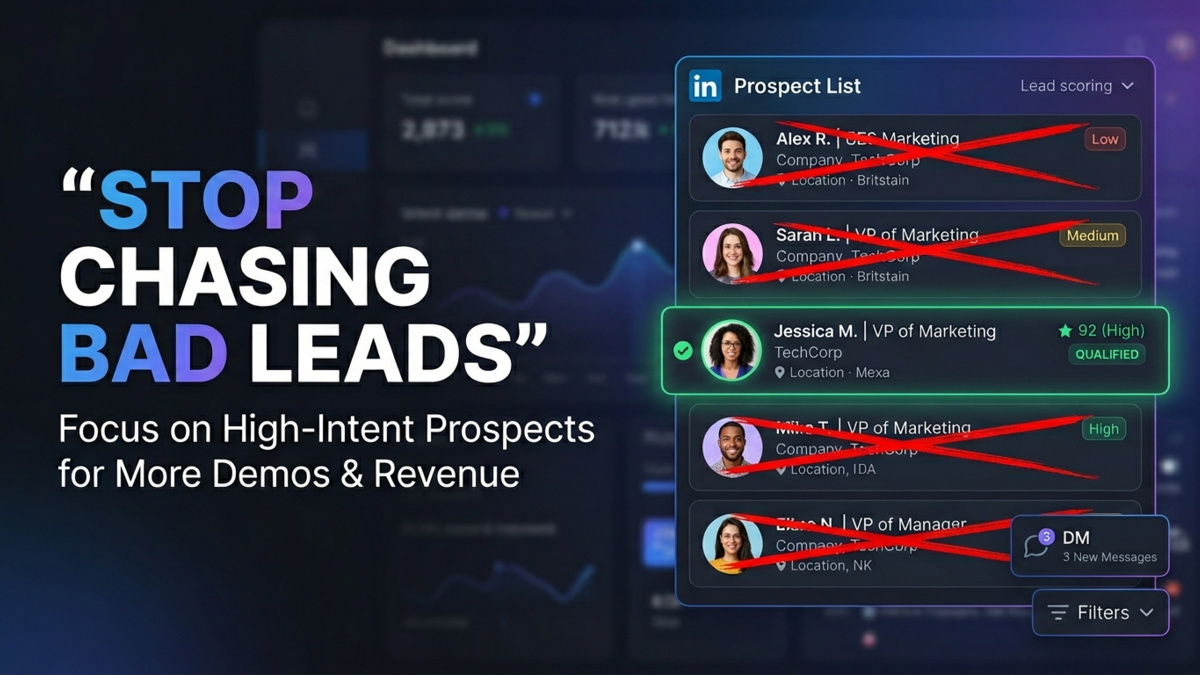
Stop Chasing Bad Leads: How to Qualify LinkedIn Prospects Before You Send a Single DM
Most LinkedIn lead gen fails for one reason: people message the wrong prospects too early. This guide shows you how to filter out bad leads, score intent, and focus only on prospects worth your time.
Read more →
5 LinkedIn Message Templates That Actually Get Replies (With Examples)
Struggling to get replies on LinkedIn? These 5 proven message templates will help you start conversations and generate leads.
Read more →
7 LinkedIn Lead Generation Mistakes That Are Killing Your Results
Struggling to get leads from LinkedIn? These 7 common mistakes are silently killing your results and how to fix them.
Read more →